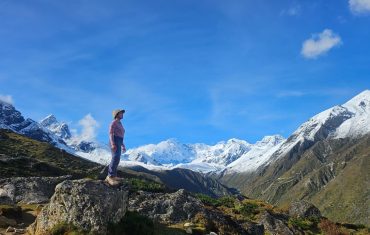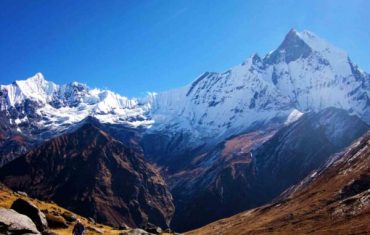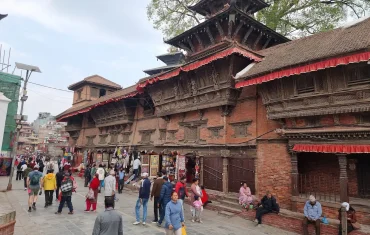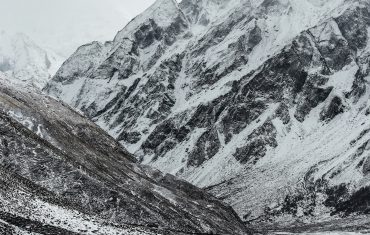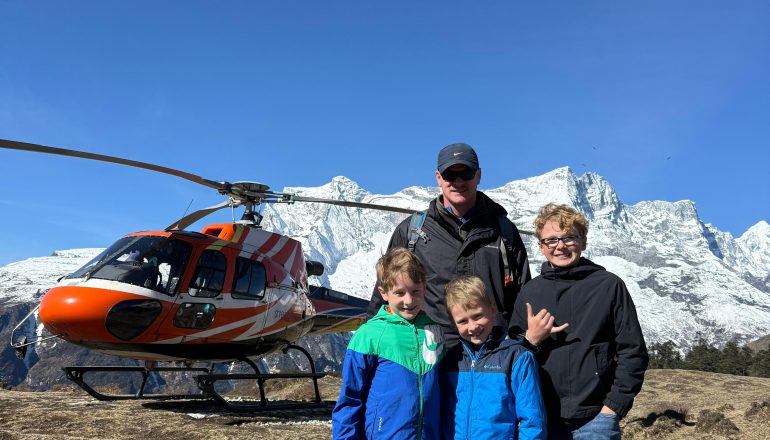
This trek combines walking in the Khumbu Valley with helicopter transport at the start and end. You get views of Everest, the peaks around it, glaciers and Sherpa villages, and you spend less time on transport than on a standard trek.
A standard Everest Base Camp trek usually means flying to Lukla and walking back the same way. A helicopter-supported itinerary changes that. Depending on the package, a helicopter takes you into the Everest region and brings you back to Kathmandu once the trek is done.
Depending on the itinerary, the walking route passes Namche Bazaar, Tengboche, Dingboche, Everest Base Camp and Kala Patthar. You travel on foot, spend time in Sherpa villages and see the mountains up close.
The helicopter does not make the trek physically easier. You still walk at high altitude, so you need a suitable itinerary, proper acclimatization, an experienced guide and some flexibility for weather.
How This Trek Differs from Others
It mixes walking with air transport, which most conventional packages do not. That can cut the time spent on some travel segments.
The aerial view is the main draw. From the helicopter you see mountain ridges, deep valleys, glaciers and remote settlements that are hard to take in from the trail.
The flights also simplify access. Depending on the package, a helicopter can handle the trip into the region and the return to Kathmandu, which suits people with limited holiday time or those who want to mix trekking with flying.
On the ground, the route goes through Sherpa villages and Buddhist monasteries and across Sagarmatha National Park. So the trip is more than a scenic flight.
What you actually get depends on the itinerary. A helicopter sightseeing tour is not the same as a trekking package that reaches Everest Base Camp on foot. Confirm the route, number of trekking days, landing points and acclimatization schedule before you book.
What the Helicopter Flight Is Like
As the aircraft nears the Khumbu Valley, the ground changes from green hills and river valleys to rugged mountains, snow-covered peaks and glacial terrain.
Depending on the itinerary, the flight starts in Kathmandu and heads for set locations in the Everest region. When visibility allows, you can see Everest and its neighbours. On trekking packages, helicopters are often used for the outward and return journeys while the walking happens in between. Some sightseeing tours include a stop or a short ground visit, but landing sites depend on conditions, aviation rules, weather and aircraft performance. Mountain weather changes fast, so flights can be rescheduled or cancelled. Keep your plans loose and follow the pilot’s instructions.
A helicopter flight also does not automatically land at Everest Base Camp. Most travellers reach Base Camp on foot from Gorak Shep, and sightseeing flights follow routes and landing arrangements approved for that specific operation.
Who the Everest Base Camp Leisurely Helicopter Tour Suits
This tour is for people who want to see the Everest region with helicopter transport and a well-planned itinerary.
It suits travellers with limited holiday time who want to cut some travel segments and still see the mountains and villages, though trekking and acclimatization still need enough days. Photographers and mountain enthusiasts get a second viewpoint on the peaks, valleys and glaciers. People who prefer organised logistics can have a trekking company coordinate transport, lodging, permits and guides. A leisurely itinerary may also include extra rest and acclimatization days. First-time visitors to the Khumbu may like having an experienced guide and fixed logistics from the start.
It does not suit everyone. If your itinerary includes trekking, you need to be able to walk on uneven trails and cope with altitude. If you have a medical condition, see a doctor before a high-altitude trip.
Best Time to Go
Spring and autumn are generally best, when trekking conditions and mountain views tend to be good. Himalayan weather is unpredictable, though, and no season guarantees clear views or flights that run on time.
Spring (March to May)
One of the most popular seasons. Temperatures become more comfortable as it goes on, and rhododendrons bloom in the lower forests. April and May are busy trekking months, although cloud and wind can disrupt flights.
Autumn (September to November)
Skies often clear after the monsoon, which gives good chances of mountain views. October and early November are especially busy, so book lodging and flights early.
Winter (December to February)
Cold, quiet and snowy. Conditions at altitude can be harsh, and snow, wind or poor visibility may stop helicopters. Prepare for freezing temperatures and possible changes to the plan.
Monsoon (June to August)
Rain, cloud and low visibility affect much of Nepal. Flight disruptions are more frequent and trails get wet and slippery. You can still travel in good weather windows, but you need to stay flexible.
Most travellers pick spring or autumn. Within those, the best date depends on your schedule, the weather you prefer and the package you choose.
Safety
Helicopter tours in the Everest region can run safely when operators follow aviation requirements and pilots decide based on current conditions. Mountain flying still carries risk. Safety depends on weather, visibility, aircraft performance, altitude and planning.
The region is hard to fly in because of its elevation and fast-changing weather. Strong wind, cloud and poor visibility can cause delays, diversions or cancellations. A responsible operator puts safety ahead of keeping a fixed schedule.
Before and during the trip:
- Choose a trekking company that works with authorized helicopter operators.
- Confirm the flight arrangements and ask about baggage and passenger-weight limits.
- Keep your schedule flexible in case weather interferes.
- Follow the pilot’s and crew’s instructions.
- Get travel insurance that covers high-altitude trekking and helicopter evacuation where it applies.
- Follow your guide’s acclimatization advice and report altitude symptoms right away.
Altitude sickness matters most for people who reach high elevations quickly. Symptoms include headache, nausea, dizziness and unusual tiredness. Severe breathlessness at rest, confusion or trouble walking in a straight line need urgent medical attention.
A helicopter flight does not prevent altitude sickness. If your package includes trekking to Everest Base Camp or Kala Patthar, you still need adequate acclimatization and a suitable itinerary.
Where the Helicopter Lands
Kala Patthar, Gorak Shep and Syangboche are separate places. Do not assume any of them is a landing point on every helicopter itinerary.
Kala Patthar (about 5,545 m / 18,192 ft)
A well-known viewpoint with a clear look at Everest and the peaks around it. Most visitors walk up from Gorak Shep, often early in the morning. Helicopter landings at this height face strict operational limits, so do not assume one is part of a standard tour.
Gorak Shep (about 5,164 m / 16,942 ft)
A small settlement and an overnight stop for many trekkers heading to Everest Base Camp. From here people walk to Base Camp or climb towards Kala Patthar. Confirm any helicopter pickup or landing with the operator, since it depends on current permissions, weather and safety requirements.
Syangboche (about 3,780 m / 12,402 ft)
Above Namche Bazaar, near the Everest View Hotel. It is separate from Everest Base Camp and Kala Patthar. Whether a helicopter can land at a designated site there depends on permissions, weather and aviation requirements.
Everest Base Camp (about 5,364 m / 17,598 ft)
On the Nepal side of Everest, and mostly visited on foot from Gorak Shep. It is not a standard landing destination for ordinary sightseeing helicopter tours. Access depends on aviation restrictions and operational arrangements.
Ready to See Everest?
Experience the spectacular beauty of the Everest region with Alpine Club of Himalaya.au . Enjoy breathtaking Himalayan views, explore traditional Sherpa villages and discover the landscapes surrounding the world’s highest mountain.
Whether you are planning a helicopter-supported Everest Base Camp trek or comparing different ways to explore the Khumbu Valley, our team can help you choose an itinerary that suits your travel dates, interests and budget.
Contact Alpine Club of Himalaya.au to learn more about available packages, helicopter arrangements, accommodation and trekking services.
https://alpineclubofhimalaya.com.au/trip/everest-base-camp-leisurely-trek-16-days-2/
Book your journey now and experience the Himalayas.