



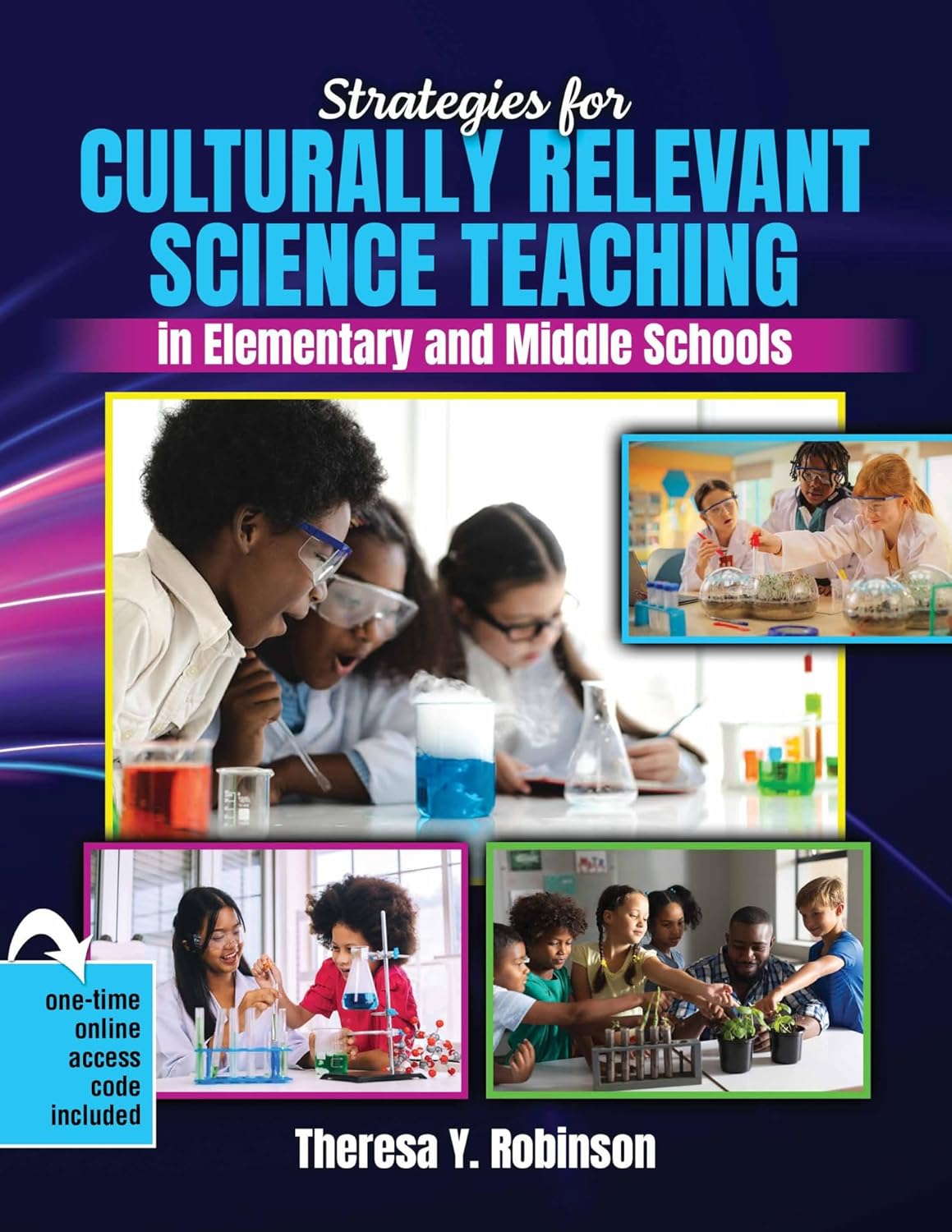
Strategies for Culturally Relevant Science Teaching in Elementary and Middle Schools Paperback – December 17, 2025

 4.3 (41 items)
 Limited Time Sale
US$48.00 cheaper than the new price!!
Free cash-on-delivery fees for purchases over $99
Product details
| Management number | 219227972 | Release Date | 2026/05/03 | List Price | US$32.00 | Model Number | 219227972 | ||
|---|---|---|---|---|---|---|---|---|---|
| Category | |||||||||
Now Available!Strategies for Culturally Relevant Science Teaching in Elementary and Middle School offers a comprehensive guide for current and future educators committed to meaningful, equitable, and effective science teaching. Grounded in personal reflection, educational theory, and classroom practice, it supports teachers in developing their identity as science educators while equipping them with practical strategies to engage all learners. Chapter 1, My Science Story, invites educators to reflect on their own experiences with science and to help students discover and articulate their personal science stories. By recognizing how identity and lived experiences shape learning, teachers can foster stronger connections between students and scientific inquiry. Chapter 2, Understanding Science Standards for the Next Generation, provides an overview of the National Science Education Standards and their historical development, followed by an in-depth look at the Framework for K–12 Science Education. Emphasis is placed on equity, diversity, and access, as well as the three dimensions of science learning―disciplinary core ideas, science and engineering practices, and crosscutting concepts―to support rigorous and inclusive instruction. Chapter 3, Classroom Environment and Culture, explores the role of democratic education, teacher self-efficacy, and critical thinking in science classrooms. It highlights the importance of social-emotional development and presents strategies for integrating science and social-emotional learning. The chapter also addresses practical considerations such as creating a caring classroom climate and designing an effective classroom setup that supports collaboration and inquiry. Chapter 4, Culturally Relevant Science Teaching, focuses on teaching practices that honor students’ cultural backgrounds and lived experiences. It reviews effective instructional models such as the 5E Model and the Learning Cycle, and introduces the SALK Model as a framework for culturally relevant science instruction. Chapter 5, Language and Literacy in Science Teaching, emphasizes the critical role of language in science learning. Topics include bilingual education, content-based literacy instruction, and the use of children’s literature and young adult literature to support comprehension. The chapter also highlights writing-to-learn strategies as tools for deepening scientific understanding. Chapter 6, Assessment for Student Learning, defines assessment as an ongoing process that informs instruction and supports student growth. It discusses strategies for preparing students for tests and quizzes and outlines effective ways to use formative and summative assessments to enhance learning rather than simply measure it. Chapter 7, Family and Community Engagement in Science, underscores the importance of partnerships beyond the classroom. It explores ways to involve families in science learning, encourages science activities at home, and highlights community-based science experiences that extend learning and reinforce the relevance of science in everyday life. Together, these chapters present a holistic, student-centered approach to science education―one that integrates standards-based instruction, cultural relevance, literacy, assessment, and community engagement to support all students as capable and confident science learners Read more
| ISBN13 | 979-8385177608 |
|---|---|
| Edition | 1st |
| Language | English |
| Publisher | Kendall Hunt Publishing |
| Dimensions | 11 x 8.5 x 1.1 inches |
| Item Weight | 12.9 ounces |
| Print length | 206 pages |
| Publication date | December 17, 2025 |
Bestseller ranking
Science & Technology


Customers who viewed this product also viewed
Lisbon


Correction of product information
If you notice any omissions or errors in the product information on this page, please use the correction request form below.
Correction Request Form